Tool and asset identification
Associate each tag with a tool or asset record and display relevant information when it is read. A pilot establishes usable tag placement and reader coverage.
Connect objects with useful information
Give tools, equipment and tagged objects a useful digital identity. We develop project-specific integrations between RFID or NFC hardware, operational records and business applications.
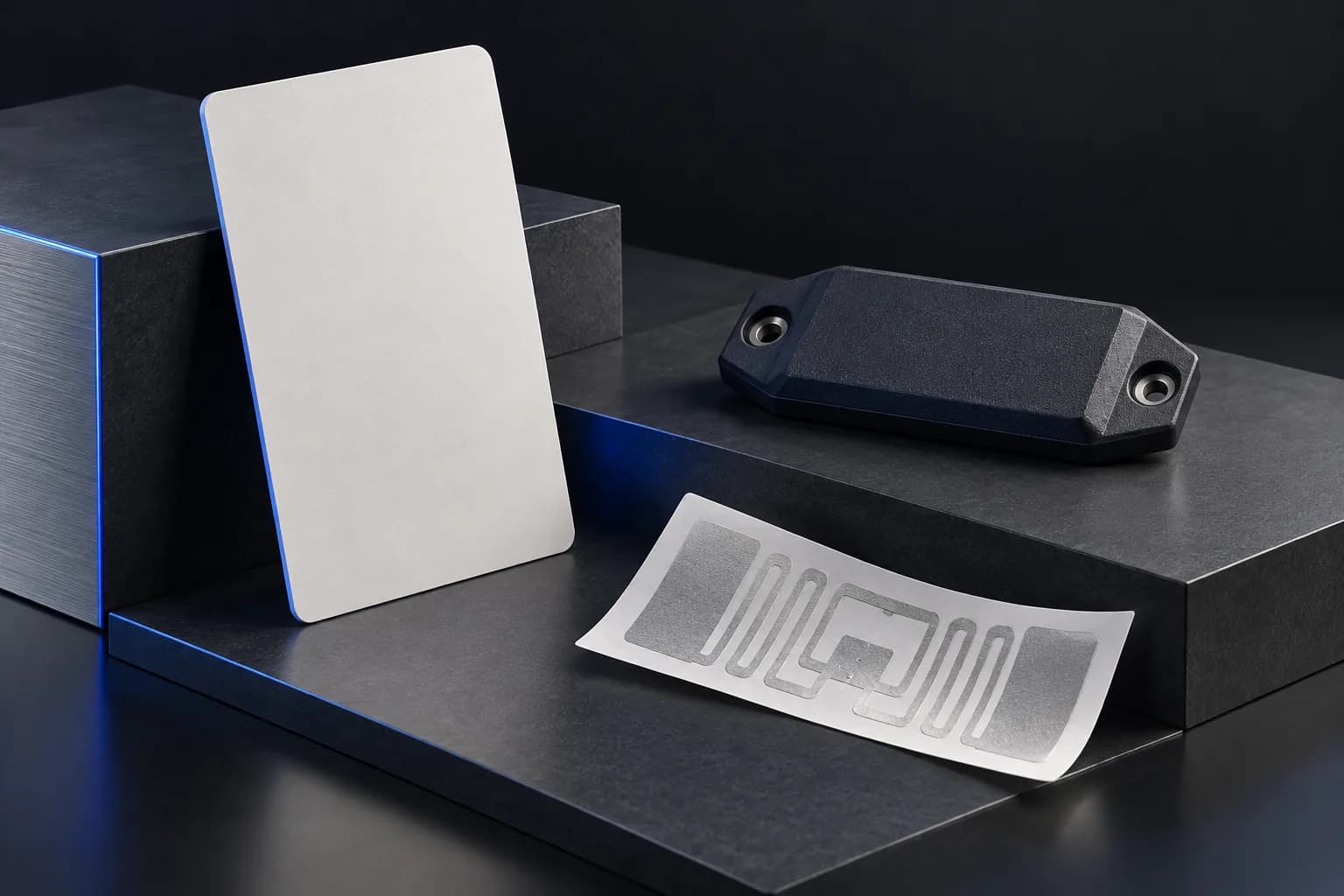
Custom applications
Examples for planning a project. Configuration and scope are confirmed around your environment and the required testing.
Associate each tag with a tool or asset record and display relevant information when it is read. A pilot establishes usable tag placement and reader coverage.
Capture reads in a defined location and connect them to operational records. Direction, custody and stock changes require explicit workflow rules, not just a detected tag.
Use compatible NFC cards or tags to open profiles, instructions or forms. Content can be managed through a web platform so the physical touchpoint remains useful.
The operating need
A tag read is only useful when the business knows what it represents and what should happen next. Carras Technologies works on RFID UHF and NFC solutions that connect identification events with inventory records, tool workflows or digital information. UHF RFID can suit reading tagged items within a defined zone; NFC suits deliberate close-range interactions such as opening a digital profile or recording a checkpoint. We select the approach around the object, environment and workflow, then validate a limited pilot before expanding the system.
Strong fit for
Common signals
A project should begin with a visible operating constraint, not a vague request for more technology.
Tools or assets have labels but no consistent digital record of their movements.
Manual identification adds repeated steps to inventory or operational checks.
A card, tag or physical object needs to open the right digital information.
Engagement scope
The final scope is defined during discovery and documented before implementation begins.
Delivery model
Clarify the operating problem, users, information, constraints, and desired business outcome.
Define the workflow, system boundaries, experience, architecture, risks, and delivery plan.
Develop in focused milestones with review, testing, documentation, and visible progress.
Launch responsibly, monitor the system, support users, and improve it using real feedback.
Business outcome
Frequently asked
RFID is a broad family of radio identification technologies. UHF RFID is often used to identify tagged items across a reading zone. NFC is designed for close-range interactions, such as tapping a compatible phone on a tag. Tags and readers must match the technology; a phone with NFC does not ordinarily read UHF tags.
It may support that workflow, but the system needs an on-site pilot. Metal, tag placement, antenna orientation, nearby items and reader power affect which tags are detected. An absent read does not by itself prove that a tool is missing, and an outside tag may still be detected.
A standard reader reports tags detected in its coverage area. Continuous coordinates or precise location require additional system design and suitable hardware. We describe the actual detection capability and its limits in the project scope.
We first review the reader protocol, available APIs, identifiers and permissions. The integration can map reads to records, deduplicate repeated events and apply the business's confirmed rules for changes and alerts.
Yes. A focused pilot uses representative objects and a realistic location to evaluate detection, missed reads, unwanted reads and operator workflow. Its results determine whether to adjust the design or expand the deployment.
Related capabilities
Make physical events visible
Sensor data, device firmware and software brought together in one practical system.
ExploreOperational Infrastructure
Operational dashboards, records, reporting, intake, and team workflow systems.
ExploreFrom an idea to a physical part
Project-specific enclosures, mounts and physical prototypes that fit the job.
ExploreStart with clarity
Tell us what is slowing the business down, what you have tried, and what a better process needs to accomplish.