Electronics enclosures
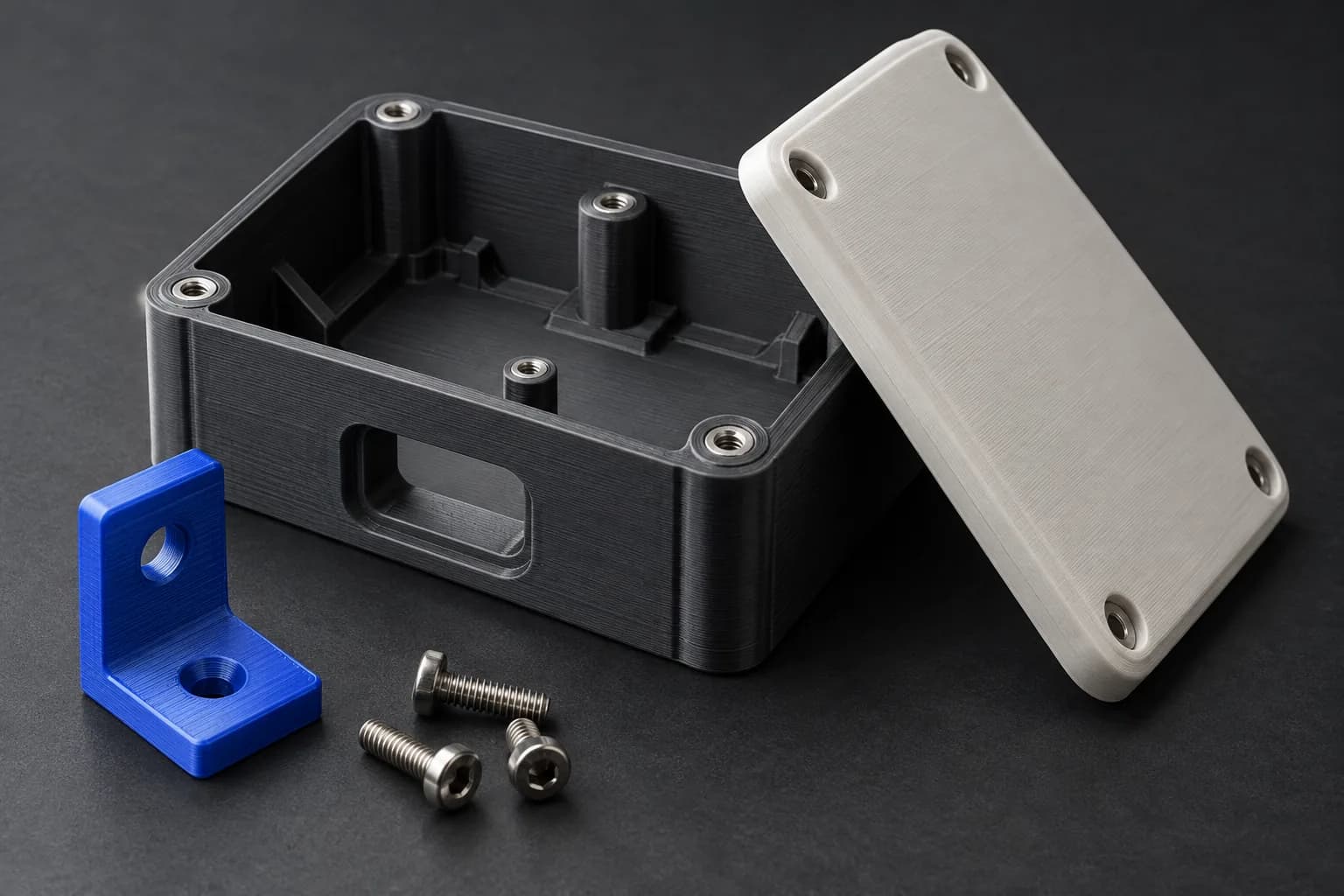
Housings with planned openings for power, USB, antenna connections and access to the board. The design starts with the actual component dimensions.
From an idea to a physical part
Turn a practical requirement into a physical prototype, enclosure or mounting solution. We help define the part, review its fit and connect it to the wider project.
Custom applications
Examples for planning a project. Configuration and scope are confirmed around your environment and the required testing.
Housings with planned openings for power, USB, antenna connections and access to the board. The design starts with the actual component dimensions.
Brackets, supports and positioning aids for a defined location. Installation constraints, service access and exposure are reviewed with the customer.
Physical samples used to check how parts connect and how a person handles the device. Findings guide the next iteration.
The operating need
A connected device needs a physical home: a housing that fits the electronics, holds its connectors and can be opened for maintenance. A workshop may need a custom holder or an adapter that is difficult to source. Carras Technologies offers project-based 3D printing and prototyping from Williston, North Dakota, with attention to dimensions, assembly and intended use. The engagement can cover an existing printable model, adapting a design, or developing a simple custom part after reviewing feasibility. We agree on materials, quantity, finish and acceptance criteria before printing.
Strong fit for
Common signals
A project should begin with a visible operating constraint, not a vague request for more technology.
A standard enclosure does not fit the board, antenna, connectors or mounting position.
An idea needs a physical fit check before committing to a finished design.
A practical mount, adapter or organizer needs dimensions specific to your workspace.
Engagement scope
The final scope is defined during discovery and documented before implementation begins.
Delivery model
Clarify the operating problem, users, information, constraints, and desired business outcome.
Define the workflow, system boundaries, experience, architecture, risks, and delivery plan.
Develop in focused milestones with review, testing, documentation, and visible progress.
Launch responsibly, monitor the system, support users, and improve it using real feedback.
Business outcome
Frequently asked
Yes. Start with photographs, a sketch, measurements and an explanation of the problem. We review whether a new design or adaptation is feasible and include the agreed design work in the quote. Printing and design are scoped separately when appropriate.
We can review an STL, 3MF or another available model for printability, dimensions and intended use. The model may need changes for wall thickness, clearances, supports or assembly before a reliable print is possible.
Material selection depends on heat, sunlight, moisture, mechanical load and the desired finish. We confirm an available material for the project rather than assuming that one plastic suits every application. A printed prototype is not automatically suitable for outdoor or load-bearing use.
Quotes depend on design time, dimensions, material, print duration, finishing, quantity and the number of iterations. Send the intended use and target date so we can assess the work and confirm a realistic delivery plan.
Yes. A project can combine the enclosure, purchased electronics, firmware and software integration. We check antenna placement, connector access, heat and maintenance needs as part of the assembly design.
Related capabilities
Make physical events visible
Sensor data, device firmware and software brought together in one practical system.
ExploreConnect objects with useful information
Connect tags, readers and business software for identification and traceability.
ExploreTechnical Direction
Clear guidance for software choices, integrations, technical planning, and modernization.
ExploreStart with clarity
Tell us what is slowing the business down, what you have tried, and what a better process needs to accomplish.