Identification & Traceability
RFID UHF vs. NFC: Choosing for Your Business
Start with the action you need: detecting tagged equipment in a defined zone is a different problem from opening a profile with a phone tap. The right choice follows the workflow.
Section 01
Define the identification event
Write down what the operator should do, which object must be identified and what the software should record. A reader detecting an identifier is an observation. A checked-out tool, a completed inventory count or an approved entry is a business event that requires additional rules.
For a tool workflow, those rules may include a known checkpoint, operator confirmation and an expected list of items. This prevents the application from treating every repeated read as a new movement.
Section 02
When to evaluate UHF RFID
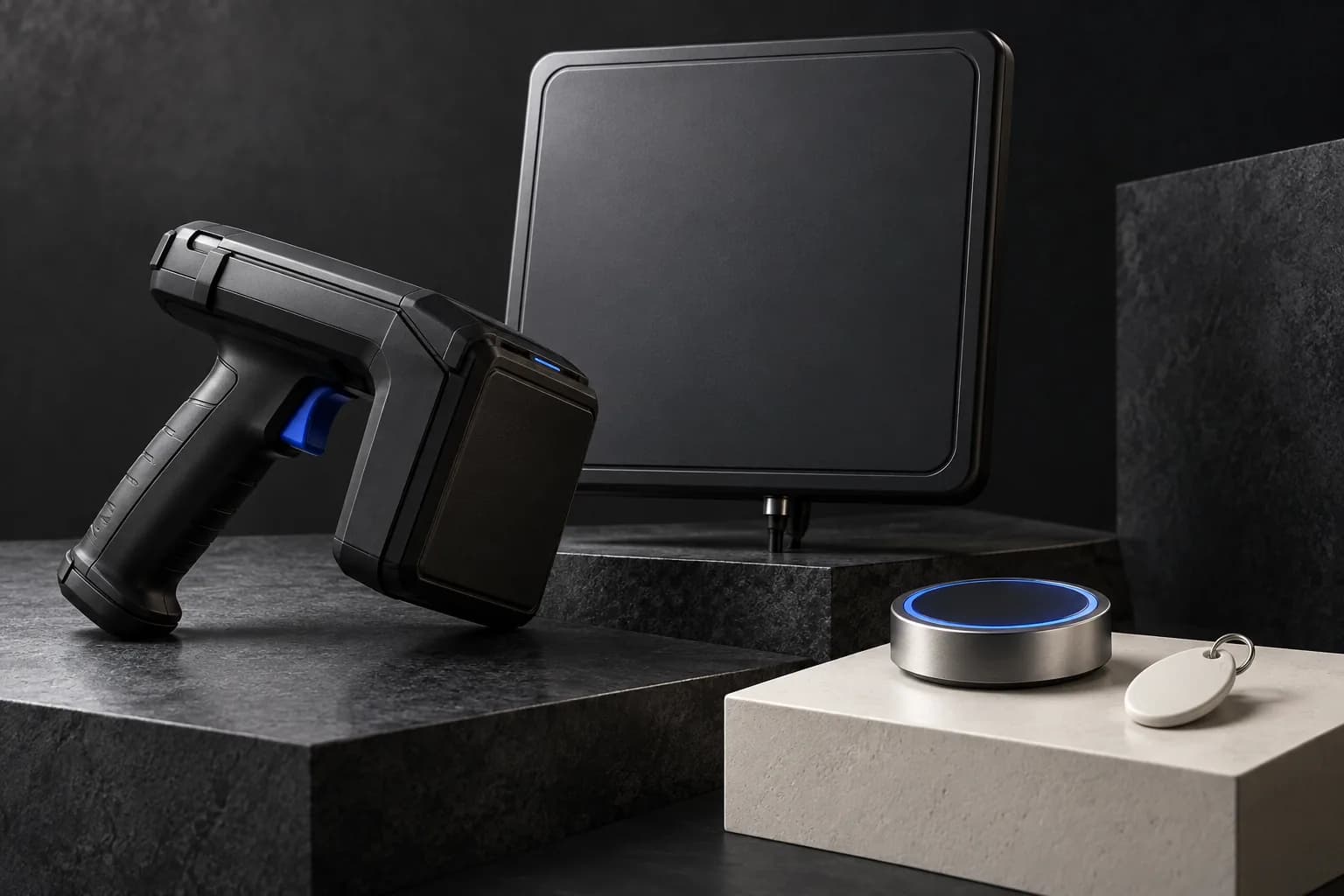
UHF RFID is a candidate when the workflow benefits from detecting tagged items within a reading area, potentially including several items in the same session. It requires compatible tags, a reader and an antenna arrangement suited to the installation.
Coverage depends on the whole setup. Metal tools, liquids, tag orientation, nearby stock and reader placement can change results. A range quoted for a component does not establish the range of a finished system inside a workshop or trailer.
- Test the actual tools and surfaces, including a suitable tag for metal where needed.
- Include both expected items and unwanted nearby tags.
- Measure missed reads, repeated reads and reads outside the intended zone.
Section 03
When to evaluate NFC
NFC suits deliberate close-range interactions. A compatible phone can read a tag that opens a web address, making it useful for digital profiles, instructions and forms. The destination can be managed by a web application when the link architecture supports that.
Confirm the experience on the phones your audience uses and decide what should happen without network access. NFC support does not ordinarily make a phone a UHF RFID reader. The tags, protocol and device must be compatible.
Section 04
Build a pilot around acceptance criteria
Choose a small, representative set of objects and a realistic location. Document tag placement, reader position, power settings and the expected workflow. Test normal operation and exceptions, then review the results with the people who will use the system.
Agree on what success means before buying equipment for a larger rollout: identification quality, operator effort, data accuracy and acceptable exception handling. Precise location or direction of travel needs its own design; it cannot be inferred from a basic tag read alone.
Section 05
Plan the software and operating cost
The project also needs an identifier-to-record mapping, permissions, event deduplication and a useful history. Establish who replaces tags, updates asset records and responds when a reader is unavailable.
Budget for hardware, installation, integration, pilot adjustments and support. Bring Carras Technologies the workflow, sample objects, intended location and existing software so we can assess an appropriate RFID or NFC approach.